“福音传回耶路撒冷”在1940年代中国教会中是什么意思?
What Did “Back to Jerusalem” Mean in China’s 1940s Christian Context?
在1940年代与遍传福音团相关的语境中,“Back to Jerusalem/福音传回耶路撒冷”主要指中国基督徒向西开展工作的宣教志向与标签,而非已完成的出境行程或统一机构专名。本条区分当时含义与后世倡导,不做预言或神学背书。待审种子。
In the 1940s setting linked to the 遍传福音团, “Back to Jerusalem” mainly names a Chinese Christian westward missional aspiration and label—not a completed outbound itinerary or the group’s sole Chinese institutional name. This question distinguishes that setting from later advocacy and offers no prediction or theological endorsement. Needs-review seed.
- 日期 · Date
- c. 1942–early 1950s (1940s setting and interruption; no precise dissolution date)(approximate-range)
- 时代 · Era
- 近现代中国教会Modern Chinese Christianity
- 主题 · Themes
- back-to-jerusalem
- bianchuan-evangelistic-band
- chinese-christianity
- missiology
- historical-reception
本条审阅状态为「needs-review」,尚未作为经审定的历史种子内容发布。Review status is “needs-review”; not published as reviewed seed history.
概要
“福音传回耶路撒冷/Back to Jerusalem”在今日中文教会讨论中常被当作一个宏大口号。但在1940年代与中国基督徒遍传福音团相关的语境中,它首先是一个历史性宣教志向与标签,需要放回当时的学院、人名与西行尝试中理解。
本条为待审种子。它解释当时含义,并区分后世倡导;不做预言、神学裁决或教派动员。
1940年代语境中它指什么
来源将陕西凤翔西北圣经学院的教师与学生与后来常被英语文献称为 Chinese Back to Jerusalem Evangelistic Band 的团体相关联。中文机构名是“中国基督徒遍传福音团”(1943年5月23日名称采用);1946年5月15日另有正式会议、章程与职事记载。二者应分开叙述,不宜把教师/学生简单写成“形成了团体”而抹平这两个组织时刻。“Back to Jerusalem”是英语/宣教学与后世叙述中常见的标签,不是该团体唯一的中文正式名称。
在这一语境中,短语主要表达:
- 中国基督徒向西开展工作的志向;
- 在部分记述中,把西行与更远的“朝向耶路撒冷”方向联系起来的志向语言;
- 与学院、人名(如马佩萱/Mark Ma 的归因见证)缠绕在一起的历史标签。
它不是:已完成的出境行程、抵达耶路撒冷的证明、统一族群宣教计划,或可直接外推到一切中国教会的共同纲领。
时间线示意:志向、组织与中断
下图为原创年代示意,标出学院语境、1943年名称采用、1946年组织化、多批西行与1950年代初中断;异象/祷告标为“报告的见证”。末端日期为约数,不表示精确解散日。
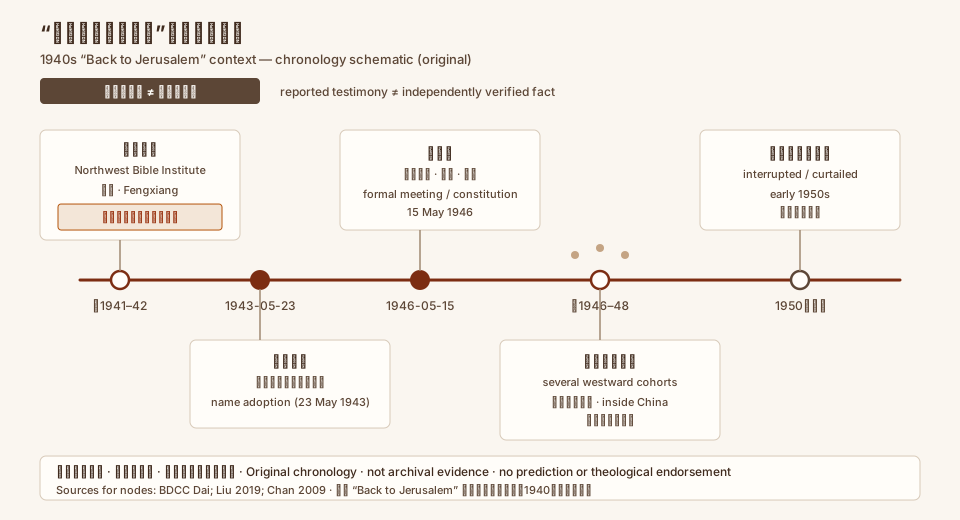
原创年代示意(节点为依据文献的报告时间;异象/祷告标为报告的见证,非独立核验事实;无精确解散日)。时间节点依据 bdcc-dai、liu-2019、chan-2009;非档案照片。
简表:
| 节点 | 如何表述 |
|---|---|
| 约1942 | 异象/祷告语境:归因见证 |
| 1943-05-23 | 采用“中国基督徒遍传福音团”之名 |
| 1946-05-15 | 正式会议、章程与职事(组织化) |
| 约1946–48 | 多批西行队伍与中国境内地点 |
| 约1950年代初 | 有组织工作中断或收缩(无精确解散日) |
与后世“福音传回耶路撒冷”叙事的区分
后世倡导(包括更晚近的全球化/动员叙事)会重新诠释或重提1940年代材料。史学上应:
- 区分1940年代遍传福音团与后世 “Back to Jerusalem” 倡导;
- 避免断言直接的组织连续性;
- 避免把当时志向写成已经实现的地理结果;
- 避免把历史词条写成对未来宣教计划的背书。
Kim-Kwong Chan(2009)等源批判研究提醒:不要把后来的夸大叙事回读进1940年代文献。
需要谨慎的几点
- 不要把宗教异象写成已核验的公共史实;应标明“报告/归因”。
- 不要声称出境、抵达耶路撒冷、系统性维吾尔宣教或统一族群目标。
- 不要使用凯旋式或对象化穆斯林社群的语言。
- 不要把本条当作神学预言或教派立场声明。
- 不要给出精确解散日期;目前只能说到1950年代初期有组织工作中断或收缩。
- 具体组织史、地点与证据限度,见相关事件条。
English overview
In the 1940s setting linked to the 中国基督徒遍传福音团, “Back to Jerusalem” is best read as a historical missional aspiration and label—associated with the Northwest Bible Institute in Fengxiang and with westward attempts inside China—not as proof of a completed journey to Jerusalem, a sole Chinese institutional name, or a uniform ethnic program.
Reported vision/prayer language is attributed testimony. 1943 name adoption and 1946 formalization are related but distinct organizational moments and should not be collapsed into a single “formation” sentence. 1946–48 materials describe several cohorts, not one continuous completed route. Early-1950s interruption curtailed organized work; no precise dissolution date is claimed. Later Back to Jerusalem advocacy is reception history: distinguish it, do not assert direct institutional continuity, and offer no prediction or theological endorsement.
声明 · Claims
区分史实、解释与后世接受史。· Distinguishes fact, interpretation, and reception.
- 史实Fact
来源将陕西凤翔西北圣经学院的教师与学生与遍传福音团相关联;学院提供了理解1940年代语境的机构背景。
Sources associate teachers and students of the Northwest Bible Institute in Fengxiang, Shaanxi, with the Band; the Institute supplies institutional context for the 1940s setting.
来源引用 · Sources: 李亚丁:《戴永冕》传记条 (bdcc-dai);OMF:中国本土宣教运动史概述 (omf-indigenous)
- 史实Fact
据传记与专门史,团体于1943年5月23日采用中文名“中国基督徒遍传福音团”;Yi Liu(2019)另记1946年5月15日的正式会议、章程与职事。
Biographical and specialist accounts record Chinese name adoption as 中国基督徒遍传福音团 on 23 May 1943; Yi Liu (2019) separately records a formal meeting, constitution, and officers on 15 May 1946.
来源引用 · Sources: 李亚丁:《戴永冕》传记条 (bdcc-dai);单传航:《新疆基督教史》第四章 (ccaa-xinjiang);Yi Liu 论“新丝绸之路”上的跨文化遭遇与“福音传回耶路撒冷” (liu-2019)
- 解释Interpretation
在与遍传福音团相关的1940年代语境中,英语/宣教学标签 “Back to Jerusalem” 及相应中文表述,宜理解为中国基督徒向西开展工作的宣教志向与历史标签;团体的中文机构名是“中国基督徒遍传福音团”,不宜把英文标签写成其唯一正式中文名。
In the 1940s setting linked to the Band, the English/missiological label “Back to Jerusalem” and related Chinese wording are best read as a Chinese Christian aspiration to work westward from China and as a historical label. The group’s Chinese institutional name is 中国基督徒遍传福音团; the English label was not its sole Chinese institutional name.
来源引用 · Sources: 李亚丁:《戴永冕》传记条 (bdcc-dai);Yi Liu 论“新丝绸之路”上的跨文化遭遇与“福音传回耶路撒冷” (liu-2019);Kim-Kwong Chan 论“福音传回耶路撒冷”运动(爱丁堡2010会议论文) (chan-2009)
- 解释Interpretation
关于1942年前后异象/祷告的记述应作为归因见证;西行与“朝向耶路撒冷”在当时材料中是志向与方向感,不是已证实的出境完成或抵达耶路撒冷。文献所见是多批队伍与中国境内地点,不是一条完成的单一路线。
Reports of 1942-era vision/prayer should be treated as attributed testimony. Westward work and, in some accounts, an orientation toward Jerusalem were aspirations—not verified border crossing or arrival in Jerusalem. Sources describe several cohorts and locations inside China, not one completed single route.
来源引用 · Sources: 李亚丁:《戴永冕》传记条 (bdcc-dai);Yi Liu 论“新丝绸之路”上的跨文化遭遇与“福音传回耶路撒冷” (liu-2019);Kim-Kwong Chan 论“福音传回耶路撒冷”运动(爱丁堡2010会议论文) (chan-2009);单传航:《新疆基督教史》第四章 (ccaa-xinjiang)
- 接受史Reception
后世“福音传回耶路撒冷”倡导重新诠释或重提1940年代材料。应区分当时团体与后世倡导,避免断言直接组织连续性,也不把历史问题写成神学预言、教派动员或对未来的背书。
Later Back to Jerusalem advocacy reinterpreted or revived 1940s materials. Distinguish the contemporaneous group from later advocacy; do not assert direct institutional continuity, and do not turn this historical question into prophecy, denominational mobilization, or endorsement of a future program.
来源引用 · Sources: Kim-Kwong Chan 论“福音传回耶路撒冷”运动(爱丁堡2010会议论文) (chan-2009);Elazar论“福音传回耶路撒冷”的后世接受与全球化叙事 (elazar-2024)
来源 · Sources
- 参考Reference李亚丁:《戴永冕》传记条Li Yading, “Dai Yongmian,” Biographical Dictionary of Chinese Christianity
Li Yading, “Dai Yongmian,” Biographical Dictionary of Chinese Christianity (BDCC). Curated Chinese biographical reference for Northwest Bible Institute context, 1943 name adoption, and reported parties/locations.
- 二手SecondaryYi Liu 论“新丝绸之路”上的跨文化遭遇与“福音传回耶路撒冷”Yi Liu on cross-cultural encounters and the “Back to Jerusalem” movement
Yi Liu, “Cross-cultural Encounters along the New Silk Road: The ‘Back to Jerusalem’ Movement,” Asia Journal of Theology 33.1 (2019), 94–109. Scholarly contextual history for 1940s timeline, 1946 formalization, and multiple cohorts.
- 二手SecondaryKim-Kwong Chan 论“福音传回耶路撒冷”运动(爱丁堡2010会议论文)Kim-Kwong Chan on the “Back to Jerusalem Movement” (Edinburgh 2010 paper)
Kim-Kwong Chan, “The ‘Back to Jerusalem Movement’” (Edinburgh 2010 conference paper, 2009). Source-critical counterweight based on newsletters and interviews; distinguishes 1940s Band materials from later narratives.
- 二手SecondaryOMF:中国本土宣教运动史概述OMF, “A History of Indigenous Mission Movements in China”
“A History of Indigenous Mission Movements in China,” OMF. Institutional historical overview for Fengxiang origin and broad westward indigenous-mission context only.
原文链接https://omf.org/a-history-of-indigenous-mission-movements-in-china/
- 二手SecondaryElazar论“福音传回耶路撒冷”的后世接受与全球化叙事Gideon Elazar on later Back to Jerusalem reception
Gideon Elazar, “Back to Jerusalem: The Chinese-Christian Road to Globalization and Self-fulfillment,” International Bulletin of Mission Research 48.2 (2024), 248–261. Scholarly reception/legacy context for later reinterpretation; not used alone for 1940s dates.
- 二手Secondary单传航:《新疆基督教史》第四章Shan Chuanhang, History of Christianity in Xinjiang, ch. 4
Shan Chuanhang, “新疆基督教史:第四章.” Specialist historical compilation for Chinese names and timeline cross-check; not used alone for contested claims.
相关经文(接受史) · Related Scripture
非证明经文。下列经文记录后世辩论或传统中的引用与接受,不作为本条历史主张的“证明文本”。Not proof text. Passages below document later use in debate or tradition (reception history), not biblical proof of the historical claim.
本条未列出相关经文。· No related Scripture listed.